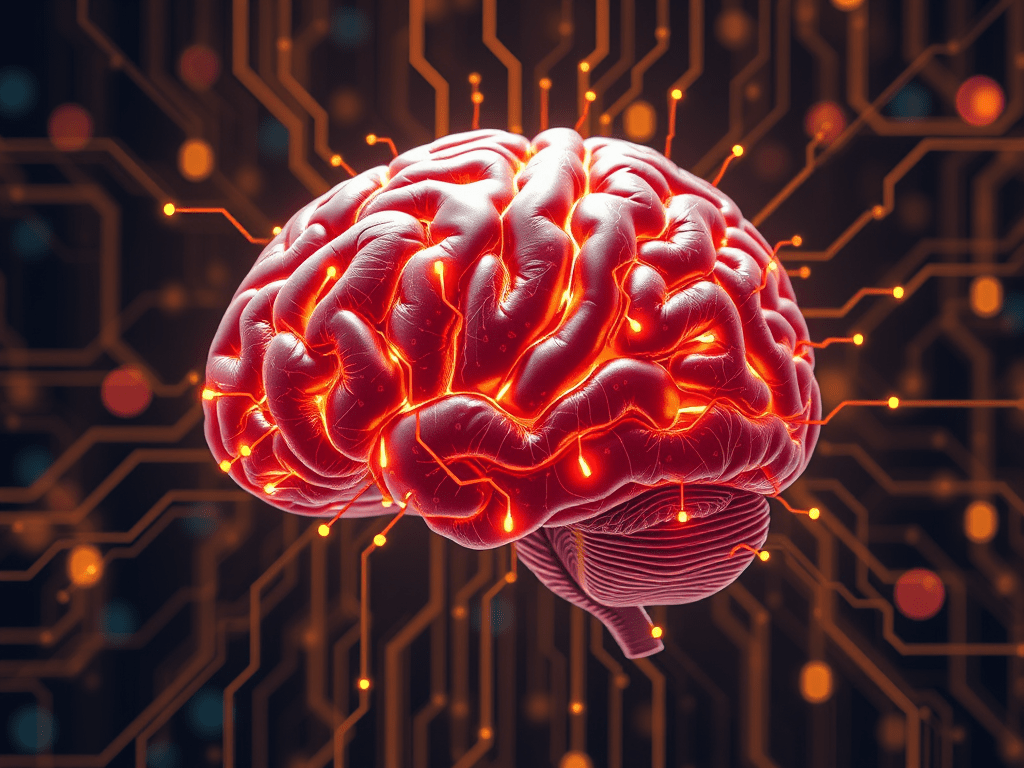
Artificial Intelligence is everywhere — drafting reports, planning workouts, analyzing finances, even suggesting what we should eat. It’s tempting to let AI do more and more for us. But here’s the danger: if we offload too much mental effort, we risk cognitive stagnation — a subtle but serious weakening of our brain’s ability to think, problem-solve, and imagine.
The brain thrives on challenge. When we stop flexing it, the decline is gradual but inevitable.
The good news? We can flip this around. Used wisely, AI doesn’t just make life easier — it can actually stimulate brain activity, boost learning, and sharpen creativity. The difference lies in how we use it.
Why Passive AI Use Can Harm Mental Growth
Let’s break down what happens when we lean too heavily on automation:
• Problem-Solving Atrophy: If AI always gives us the fastest answer, our brain loses the practice of weighing options, troubleshooting, and thinking through complexity.
• Memory Decline: Outsourcing recall to an AI “memory” can dull our natural ability to store and retrieve information.
• Creativity Dampening: If we only consume AI-generated ideas, our imagination risks becoming passive rather than active.
• Decision-Making Weakness: Relying on pre-built recommendations reduces our ability to think critically and make confident, independent choices.
But that doesn’t mean AI is bad. It means we need to engage with it differently.
Creative Ways to Use AI to Boost Brain Activity
Here are practical methods to make AI a mental sparring partner instead of a shortcut:
- Turn AI Into Your Debate Partner
• How to do it: Ask AI to challenge your assumptions or argue the opposite side of your opinion.
• Brain benefit: This activates critical thinking and forces you to evaluate multiple perspectives. - Use AI to Build Custom Brain Games
• How to do it: Generate logic puzzles, math problems, or language riddles tailored to your skill level.
• Brain benefit: Keeps memory and executive functioning sharp. - Co-Create Instead of Copy
• How to do it: Write the first draft of a report, story, or business plan yourself. Then use AI to refine, expand, or restructure it.
• Brain benefit: Preserves original thought while stretching creativity. - Engage in Reflective Journaling With AI
• How to do it: Share goals, fears, or challenges and ask AI probing questions back.
• Brain benefit: Stimulates metacognition — thinking about your thinking. - Learn Faster by Explaining to AI
• How to do it: Teach a concept to AI, then have it quiz you or poke holes in your explanation.
• Brain benefit: Reinforces learning through active recall and deeper processing.
The Neuroscience Angle
Neuroscience research shows that neuroplasticity — the brain’s ability to adapt and grow — is directly tied to challenge and novelty. Automation can remove these opportunities if we let it. But used correctly, AI can actually introduce new challenges:
• Exposure to novel perspectives (asking AI for cultural or philosophical angles).
• Increased cognitive load control (offloading repetitive tasks so the brain can focus on higher-level thinking).
• Enhanced creative cross-pollination (mixing your ideas with AI’s associations).
In other words: AI can be a brain dumbbell or a couch cushion. It depends on how we lift it.
The Balanced Approach
Here’s the formula for staying sharp:
• Automate repetition. Offload the boring stuff (scheduling, formatting, routine calculations).
• Engage in creation. Keep ownership of ideation, strategy, and problem-solving.
• Use AI for stimulation. Challenge it, debate it, let it question you.
Think of AI as a sparring partner in the gym of your mind — not the personal trainer who does the workout for you.
Final Call to Action
AI is reshaping our world, but it doesn’t have to reshape us into passive thinkers. The future belongs to people who can collaborate with AI, not surrender to it.
So the next time you open an AI tool, don’t just ask it for the fastest answer. Ask it to challenge you, teach you, or stretch you.
Your brain will thank you for decades to come.
✅ Related Posts for More Insight:
• In 5 Years, You’ll Wish You Started Learning AI Today — Here’s Why
• The Top 10 Industries Where Employees Must Use AI Tools to Thrive
• The AI Lifestyle Experiment: Living 7 Days Powered by Nothing but AI
 ToolHustle.ai
Leave a comment